



“Back to the Future” (Artificial Intelligence in Schools)
The future is HERE, and parents need an understanding of what AI is, how it’s used in Hawaii’s public schools, and how it can support students with disabilities. You’ll also learn potential biases and social-emotional risks posed by AI along with questions to ask the IEP team when discussing AI tools.
Speakers: Daniela Bond-Smith & Moche Karabelnik
“Come Together” (Conflict Resolution Strategies)
Speaker: Roberta Hickey-Gomez
Mediation is one of the best tools to resolve disagreements with school over your child’s special education services. Learn from a pro about what mediation actually is, why using it early can make things easier for everyone, and how families can get started with the process. It’s all about giving parents useful tools to navigate school disagreements with confidence.
“Decisions Are My Jam” (Supported Decision-Making)
Speaker: Che Silvert
Supported Decision-Making is a brand new legally recognized process in Hawaii that helps teens
with disabilities make choices and build confidence and independence without having to go it
alone. You’ll leave with a handy starter toolkit and a clearer picture of whether this approach
could be a great fit for your family.

“Don’t Worry, Be Happy” (De-stress Techniques for Parents)
Speaker: Meriah Nichols
Would you like to learn to spot your own stress triggers and signs—like irritability, trouble sleeping, or headaches—and learn simple self-care strategies that really make a difference? Come learn easy tips from this super-mom and licensed therapist for managing busy schedules, staying organized, finding respite, and setting healthy boundaries, so life feels a bit more manageable.
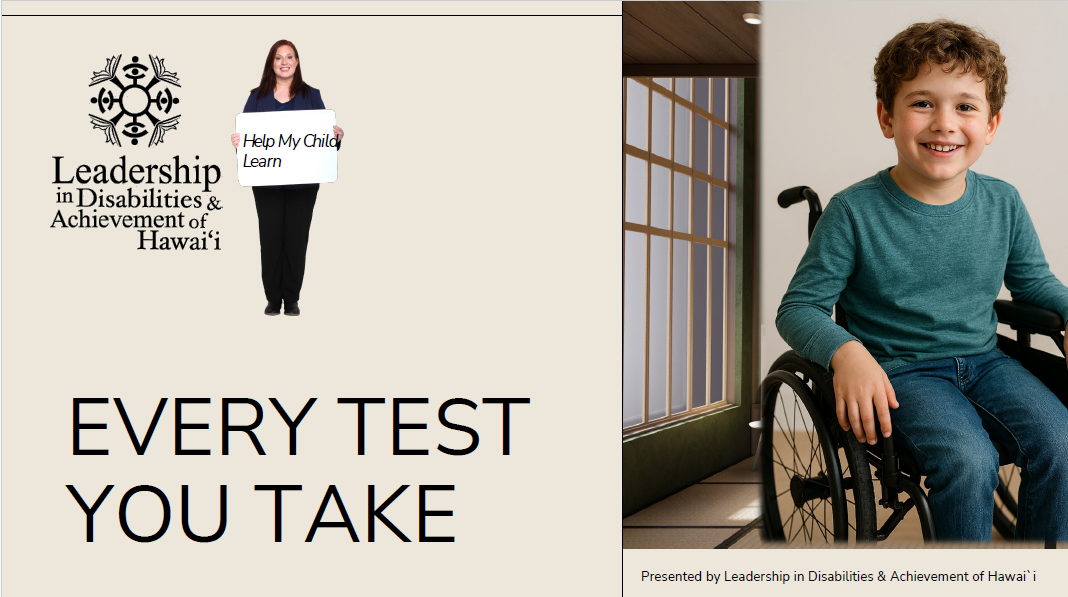
“Every Test You Take” (Educational Assessments)
Speaker: Rosie Rowe
Deepen your understanding of how educational assessments are designed and why they are used when a child is suspected of having a disability. You’ll learn what different tests measure,
how the results can support your child’s learning and services, and the important role parents play
throughout the assessment process.
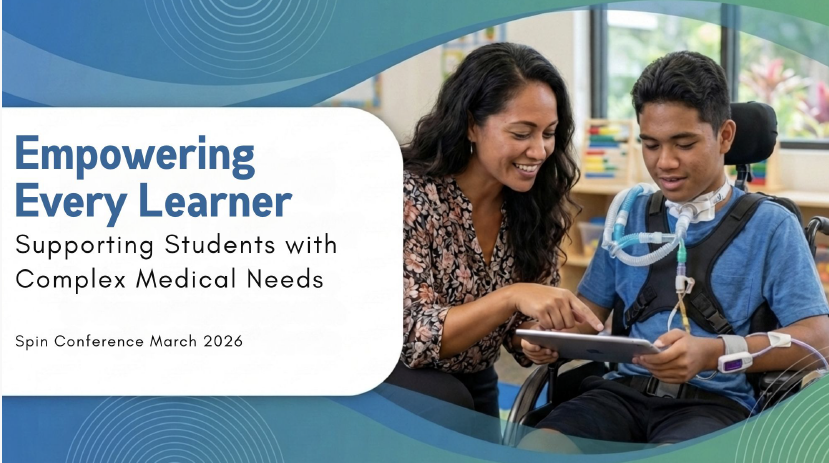
“Handle with Care” (Supports for Medically Fragile Students)
Speakers: Suzanne McFadden, Lisa Doran, Janelle McCabe, Amber & Richard Rosa
This power packed panel of an educational specialist, a speech language pathologist and parents will help you understand what the term “medically fragile” means in Hawaii’s schools and pediatric care. They will walk you through the kinds of supports that can be part of an IEP or 504 plan, including how assistive technology can boost mobility, communication, and learning, and why including students with complex medical needs in everyday classrooms and extracurricular activities really matters.
“Lean on Me” (Supports for Siblings)
Speakers: Jonathan Alexander, Maiya Arias, Joy Cabuloy
Having a brother or sister with a disability can shape a child’s responsibilities, friendships, community
involvement, and access to family time. Come explore what influences sibling relationships—both the challenges and the strengths—and gain insights directly from siblings about how this experience has
impacted their lives. Parents will leave with practical ideas for supporting all their children.
“Preschool is Totally Cool” (Preschool Transition)
Speakers: Kauinohea Correa, Dana Pereira, Chelsea & Nick Boughton
Parents of young keiki moving from early intervention services to preschool have lots of
questions. Learn more from these wise mentors—an early intervention specialist who will walk you through the transition process, an early learning specialist from the Department of Education
who will describe DOE’s evaluation process and options for preschool, and an akamai mom and
dad who will share tips on preparing and partnering.
“Radical Realities for Autism Today” (Autism & Current Controversies)
Speakers: Meghan Miller & Susan Wood
This workshop helps parents understand what ‘evidence-based’ really means when it comes to
autism supports and therapies. You’ll look at why some treatments are considered controversial
and learn simple tools for evaluating options, so you can make informed decisions that feel right
for your child and family.
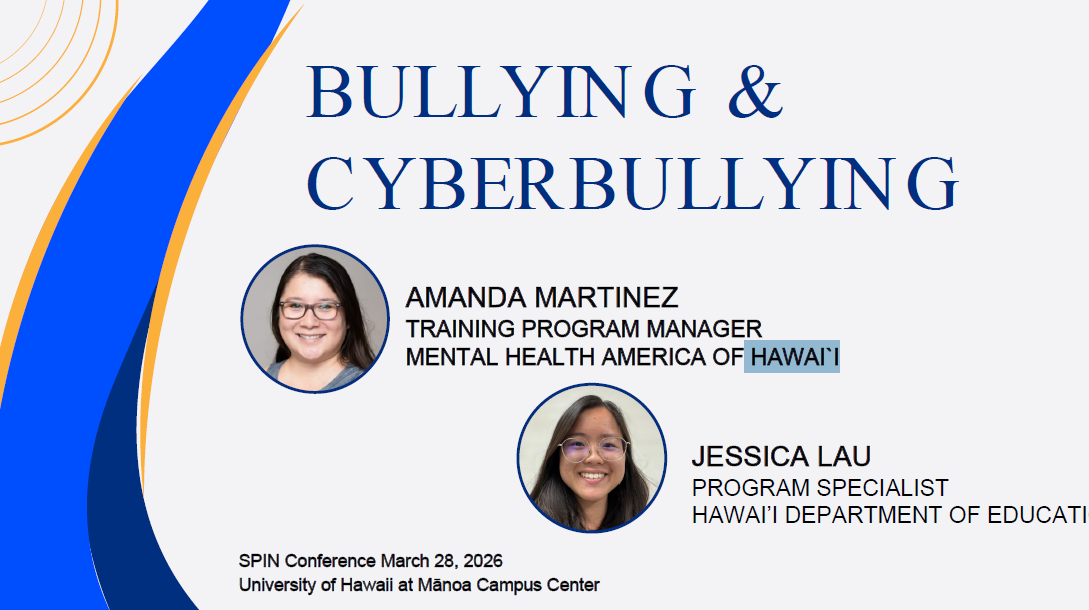
“Stand by Me” (Bullying Prevention)
Speakers: Amanda Martinez & Jessica Lau
This workshop will help you to better understand bullying and cyberbullying—especially how it
affects students with disabilities here in Hawai‘i. You will leave with practical tools and steps to
help keep your child or student safe at school and online.
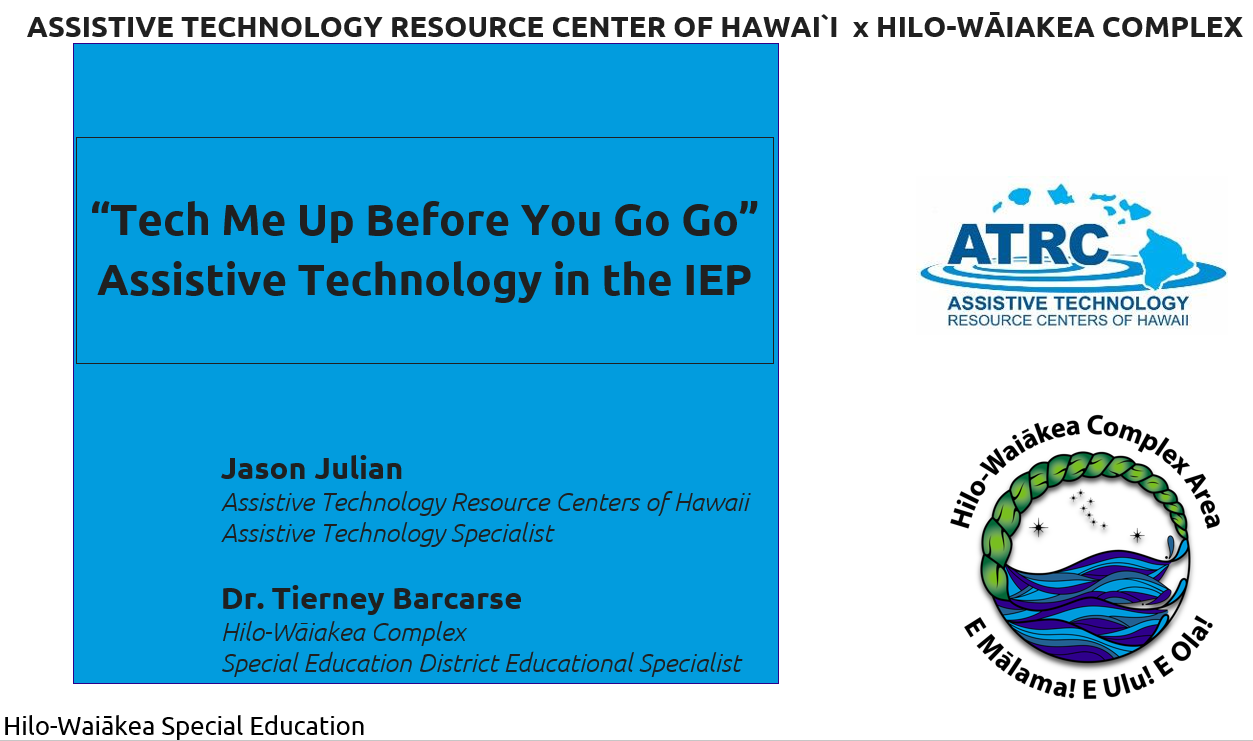
“Tech Me Up Before You Go Go” (Assistive Technology in School)
Speakers: Jason Julian, Tierney Barcarse
Assistive technology can help students with disabilities meet their IEP goals in areas like communication, mobility, learning, vision, and hearing. You’ll learn what counts as AT and AT devices, how the IEP team decides what a student needs, and how the Department’s home-use policy works. Join our two experts to get clear, practical info to support your child.
“That’s What Friends are For” (Finding Support Networks)
Speakers: Kahea Ilae, Shyla & Cody Gacusana & Rose DeMello
Supportive communities can offer encouragement, practical tips, and a sense of connection for families of children with disabilities—especially those navigating military life and frequent transitions. You will be introduced to helpful Hawaiʻi-based resources like Hoʻomana, Aloha Minds of All Kinds, and the Exceptional Family Member Program, so families know they have places to turn for support.
“True Colors” (Understanding ADHD)
Speaker: Dr. Jeff Okamoto
In this workshop a developmental-behavioral pediatrician helps parents and teachers better
understand how Attention Deficit Hyperactive Disorder (ADHD) affects a child’s learning,
behavior, and emotions. He offers practical strategies for supporting focus, routines, and
confidence to use at home and school to help children thrive.
“Talking Heads” (Screen Time and Language Comprehension)
Speaker: Verna Chinen
This workshop helps parents understand what “screen time” really includes and the different ways kids use it. You’ll explore how certain screen habits can help or sometimes slow language development, with simple examples. You’ll also leave with easy, family-friendly tips for building healthy screen routines.
